
On the night of 19 July 2026, Spain were crowned world champions, beating Argentina 1-0 after extra time in the FIFA World Cup final, Ferran Torres settling it with the game's only goal — Spain's second world title, after 2010. To reach that final, Spain had knocked out France 2-0 in the semi-final five days earlier. In India, as in every World Cup, millions stayed up to watch all of it. And there lies the quiet paradox of the tournament for India: it is one of the largest football audiences on earth, and it has never once played in the competition it follows so devotedly.
The two facts sit uncomfortably together — a nation of more than 1.4 billion people, a football following counted in the hundreds of millions, and, in 75 years, not a single World Cup appearance. India came closest in 1950, when it qualified for the tournament in Brazil after other Asian teams withdrew, then pulled out before a ball was kicked. Contrary to the popular story, this was not a ban on playing barefoot; the All India Football Federation has cited short notice, the cost of the journey so soon after Independence, and a focus at the time on the Olympics. The lesson has aged well: World Cup participation is built, not wished for.
This is the gap the Indo-French Sports Association (IFSA) exists to narrow — and it is telling that the country India kept watching deep into the final four is France, IFSA's partner nation. France did not win this World Cup, but its place in the last four was, once again, no surprise: world champions in 2018, finalists in 2022, semi-finalists in 2026. Few countries have turned football into so reliable a production line. How a federation builds academies, develops coaches, and lays a path from the playground to the podium is precisely the expertise IFSA's bridge is designed to carry from France to India.
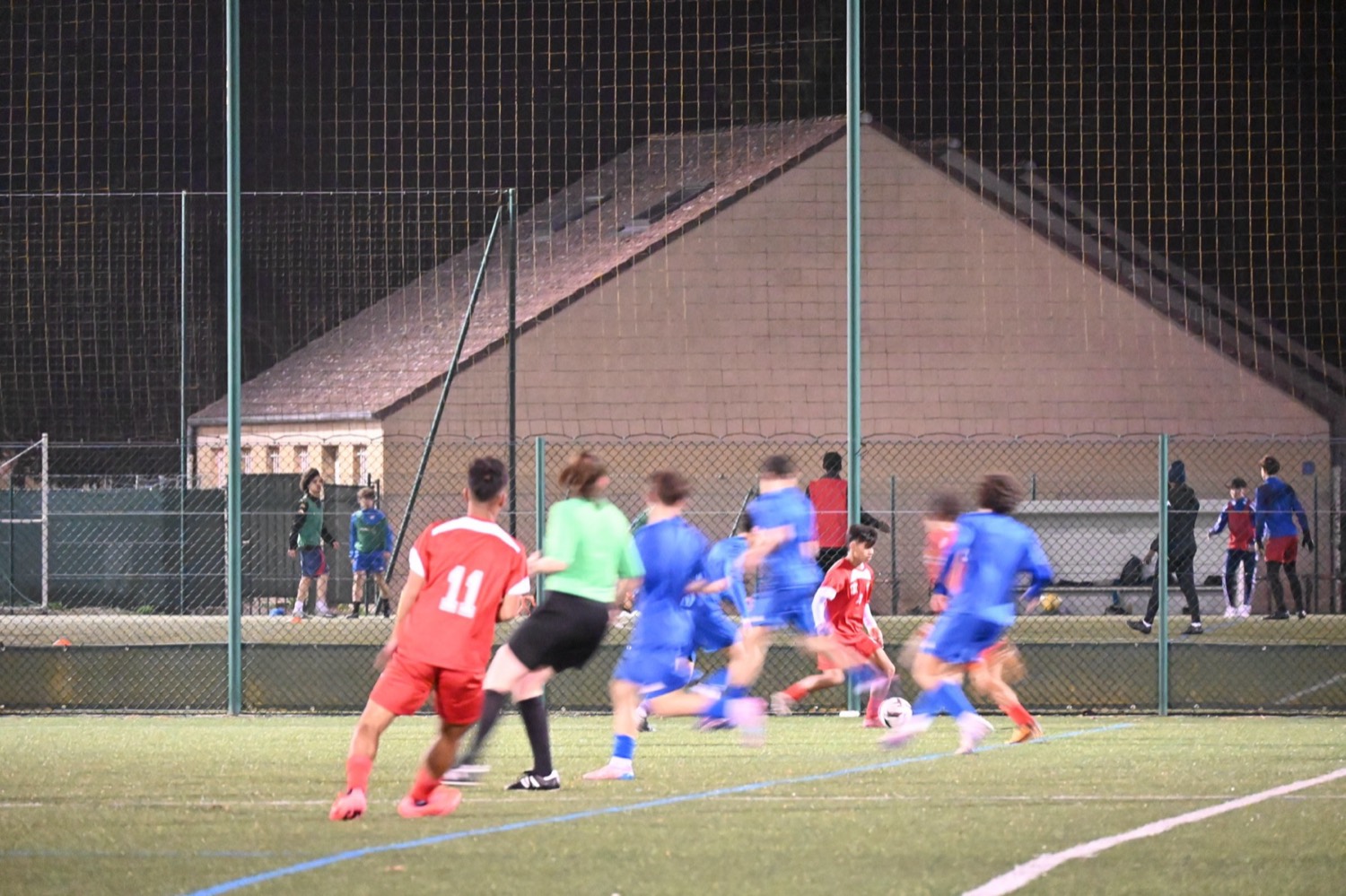
That bridge is not an abstraction. Its centrepiece arrives this autumn: the third Indo-French Football Tournament (IFFT), scheduled for 26 October to 1 November 2026 — the first edition held on Indian soil, an under-18 tournament across several host cities that brings French and Indian youth football onto the same pitch. Where the World Cup is watched in India, the IFFT is played in India. It is a small, deliberate inversion of the usual relationship between Indian supporters and the global game.
On the club side, IFSA's football work is anchored by an established partnership with Olympique Lyonnais, one of France's most respected academies, built around coaching and youth exchange. Talks with other French football institutions — among them LOSC Lille and the Ligue de Football Professionnel — are developing rather than settled, and IFSA is careful to describe them that way. The prize is not a badge on a jersey; it is the transfer of method.
Above the grassroots sits a government-to-government commitment. In the India-France Joint Statement of February 2025, the two countries agreed that France would "share France's experience and expertise regarding the organization and securing of major international sporting events in the context of India's bid to host the Olympics and Paralympics Games in 2036." A World Cup is the clearest illustration of what that expertise looks like in practice — and of why a country preparing to bid for the Games would want a partner that both stages them and keeps reaching their latter stages.
The bridge is wider than football. In April 2026 IFSA signed a letter of intent with France's Ligue Nationale de Basket to open a developing route for Indian players, coaches and officials into French professional basketball. In para-sport, IFSA has built a partnership with the Paralympic Committee of India and took part in the World Para Athletics Championships in New Delhi in 2025, extending support it first offered around the Paris 2024 Paralympic Games. A World Cup weekend is a useful reminder that elite sport is a system, not a single team.
That systems view has earned IFSA a seat at wider tables. In June 2026 it took part in the session of UNESCO's Intergovernmental Committee for Physical Education and Sport (CIGEPS) in Paris as an observer, aligning its work with the Fit for Life framework; a month earlier, the Ambassador of France to India, H.E. Mr Thierry Mathou, wrote recognising its role in Indo-French ties through sport. Beneath all of it runs a human current the sports pages rarely note: the same 2025 joint statement set a target of 30,000 Indian students in France by 2030. Coaches and students cross the same bridge.
Spain will keep the trophy for four years; France will regroup and, on current form, start any tournament among the contenders to reach the last four again. India will watch, as it always does. But the measure of IFSA's work is the distance between watching and playing — and the next whistle that matters for Indian football does not blow in another country. It blows at home, in October, when the world's game comes to Indian soil at the IFFT. That is how a 75-year wait starts, finally, to shorten.