
Start with the honest number. India's men's national basketball team sits 76th in the FIBA world rankings, as of March 2026. That is not a story of arrival. It is the reason a door matters.
In April 2026 we signed a letter of intent with the Ligue Nationale de Basket, the body that runs France's professional basketball. We should be precise about what that is. A letter of intent is a statement of intent — not a transfer, not a contract, not a player on a plane. We say so plainly because the distance between an announcement and a delivery is exactly where credibility is usually lost, and we would rather be trusted in 2030 than applauded in 2026.
So: what is behind the door?
The LNB runs two professional divisions. The first, LNB Élite, has sixteen clubs playing a thirty-game regular season from late September to May, with play-offs into June. Below it, Élite 2 — long known as Pro B — has twenty. Attached to those clubs are the centres de formation, the club training structures where French professionals are actually made. For any realistic pathway, the training centre is the entry point, not the first team.
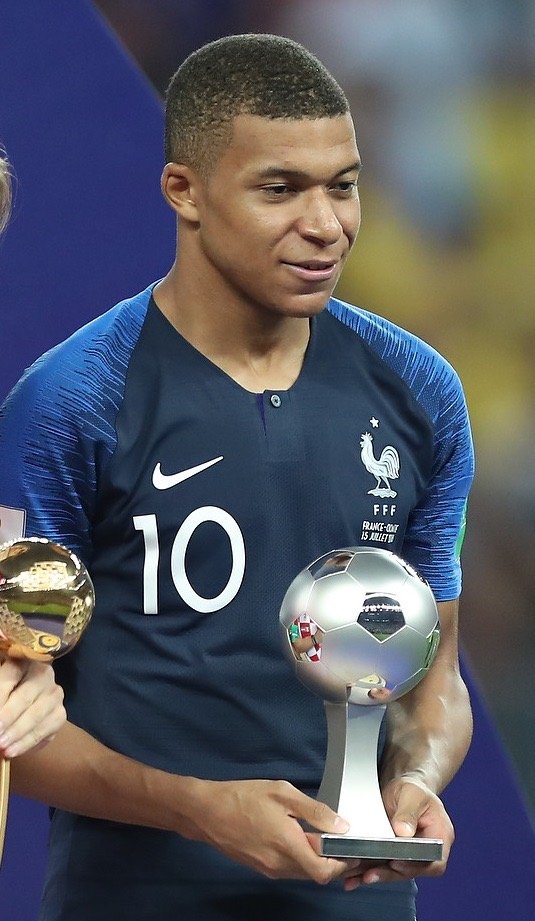
Why France, and not somewhere with more marketing noise? Because the French system has spent a decade proving it can build players rather than merely import them. France took Olympic silver at Paris 2024. French basketball produced back-to-back No. 1 picks in the NBA draft — Victor Wembanyama in 2023, Zaccharie Risacher in 2024. And Wembanyama's route ran through the French clubs, not around them: ASVEL, then Metropolitans 92, inside the domestic league, before anyone crossed an ocean. France develops at home and lets the world come and buy. That is the model worth standing next to.
What it would look like for an Indian player is less cinematic than it sounds. Not a first-team contract. A season inside a club's development environment: French coaching standards, daily competition against players who have done this since childhood, a physical-preparation culture, and — quietly the most valuable part — the ordinary rhythm of a professional week, repeated until it is unremarkable. Pathways are not built out of highlights. They are built out of Tuesdays.
We should also name what is not yet done, because a list is more useful than a photograph. The letter of intent gives us the intent. It does not yet give us selection criteria, or the age band, or the language and schooling arrangement, or guardianship and safeguarding provisions for any player under eighteen, or the answer to who pays for what. Those are the questions that decide whether a pathway carries one player or twenty. They are being worked, and we will publish them when they are settled rather than before.
Our confidence here does not rest on the signature. It rests on a delivery. Our strongest result to date is a twenty-day under-18 camp run in Lyon for players sent by the Government of Meghalaya, from which four were scouted. No announcement preceded it and no announcement was needed. It worked because young players were put inside a serious environment for long enough to be measured properly. The sport is different; the method is identical.
India has the beginnings of its own structure — an NBA academy, a domestic professional league taking shape, and a 3x3 side that qualified for the 2026 Asia Cup main draw by beating opposition ranked far above it. None of that is a substitute for time spent inside a mature professional system, and none of it competes with a French pathway. They are the same project seen from two ends.
A signed door is not an open one. It is a door that now has a handle on our side — and the next honest sentence we publish about it should be a name, a season, and a result.