
India's para-athletes have just delivered their finest performance in Commonwealth Games history. At Glasgow 2026 they won seven medals — three of them gold — with six coming from para-athletics alone, ending a twenty-year wait for a Commonwealth para-athletics podium. But the medal table is the smallest part of the story. The larger one is who won them, and from where.
India's account was opened not in a marquee event but by Jhandu Kumar, a para-powerlifter from Harnaut in Bihar's Nalanda district, who took bronze in the men's heavyweight category — missing silver by a tenth of a point. Struck by polio at five, Kumar drove an e-rickshaw through the pandemic when his family's vegetable trade faltered, training every evening after. In 2023 he sold the e-rickshaw to fund his path to the national championships. Today he trains at the Sports Authority of India's centre in Gandhinagar — in Gujarat, the state that will host the next Commonwealth Games.
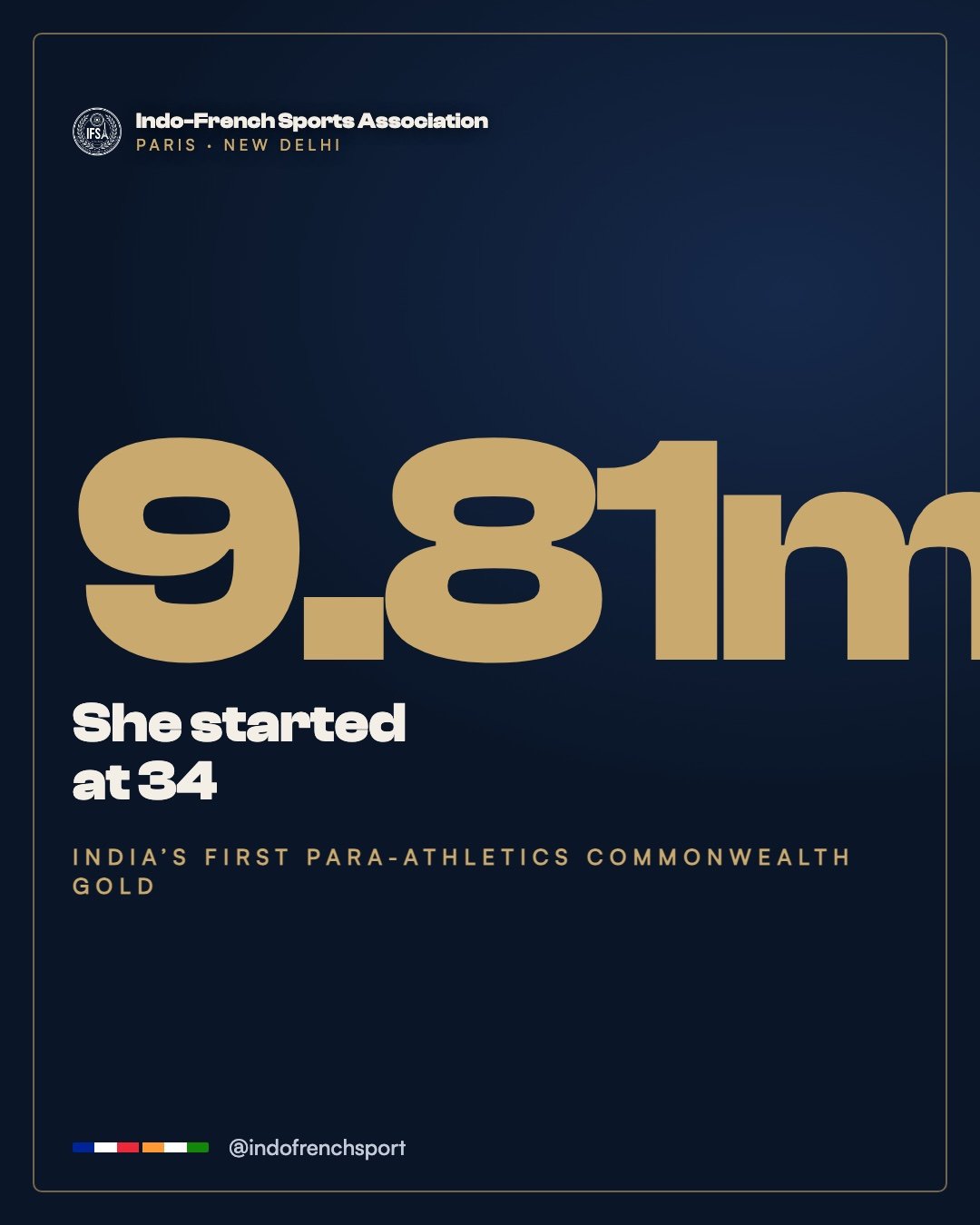
In the women's shot put F57, Sharmila Dhankar threw 9.81 metres for gold — and became the first Indian ever to win a para-athletics gold at the Commonwealth Games. From Mahendragarh in Haryana, she contracted polio at two. Married at nineteen, she endured domestic abuse before returning to her parents' home with her two young daughters. She took up the sport only at thirty-four, and was national champion within a year.
On the track, 23-year-old Dilip Gavit ran the men's 100m T47 in 10.71 seconds — a Games record — for gold, with Mohammed Basil a stride back for silver and an Indian one-two. Gavit's right arm was amputated after a fall from a mango tree at five; he did not start running until seventeen. Two years ago he stood in a Paris 2024 Paralympic final and finished last. Soman Rana added a further gold in the men's shot put F57. These are not only athletic results. They are testaments to a human spirit that reached the podium despite the system, not because of it.
Talent and resilience of this order deserve a world-class structure behind them — and that is where the France–India sporting axis becomes more than sentiment. Glasgow ran para-athletics inside the main programme: one Games, not two, the same stadium and the same crowd. It is the model Paris 2024 set as the modern benchmark for a Games that treats para-sport as headline rather than afterthought — and France has just offered to share it.
That offer is now concrete. In April 2026 the French Institute in India and the Paralympic Committee of India launched Para Élan, a three-year initiative to carry the values of inclusion, resilience and equality to some 10,000 students across Indian schools, signed under the French Ambassador, H.E. Mr Thierry Mathou, alongside para-athletes from both countries. It is proof that the corridor between the two nations is open — and that para-sport travels on it.
At IFSA this is the work we have built toward. Our own partnership with the Paralympic Committee of India, and the support we extended around the Paris 2024 Paralympic Games and the 2025 World Para Athletics Championships in New Delhi, sit on the same bridge. And the timing is not incidental: in 2030 India hosts the Centenary Commonwealth Games in Amdavad, with para-athletics, para-swimming, para-table-tennis, para-powerlifting and para-bowls all on the programme. The athletes from Bihar and Haryana will compete at home.
Which is why Glasgow is not a finish line but a brief. Three things would turn this generation's grit into a system worthy of it: a fully integrated para-Games in 2030, para inside the main programme as Glasgow and Paris both showed works; investment now — not in 2029 — in classification and biomechanical coaching, the technical margins where India still loses medals and where French expertise runs deepest; and a para pathway built from the district up, so the next Sharmila Dhankar or Jhandu Kumar is carried by the system from the first day rather than reaching the podium in spite of it.
The dignity was never in question. Glasgow proved the merit. What Amdavad 2030 must add is the structure — and the France–India bridge is where it can be built.
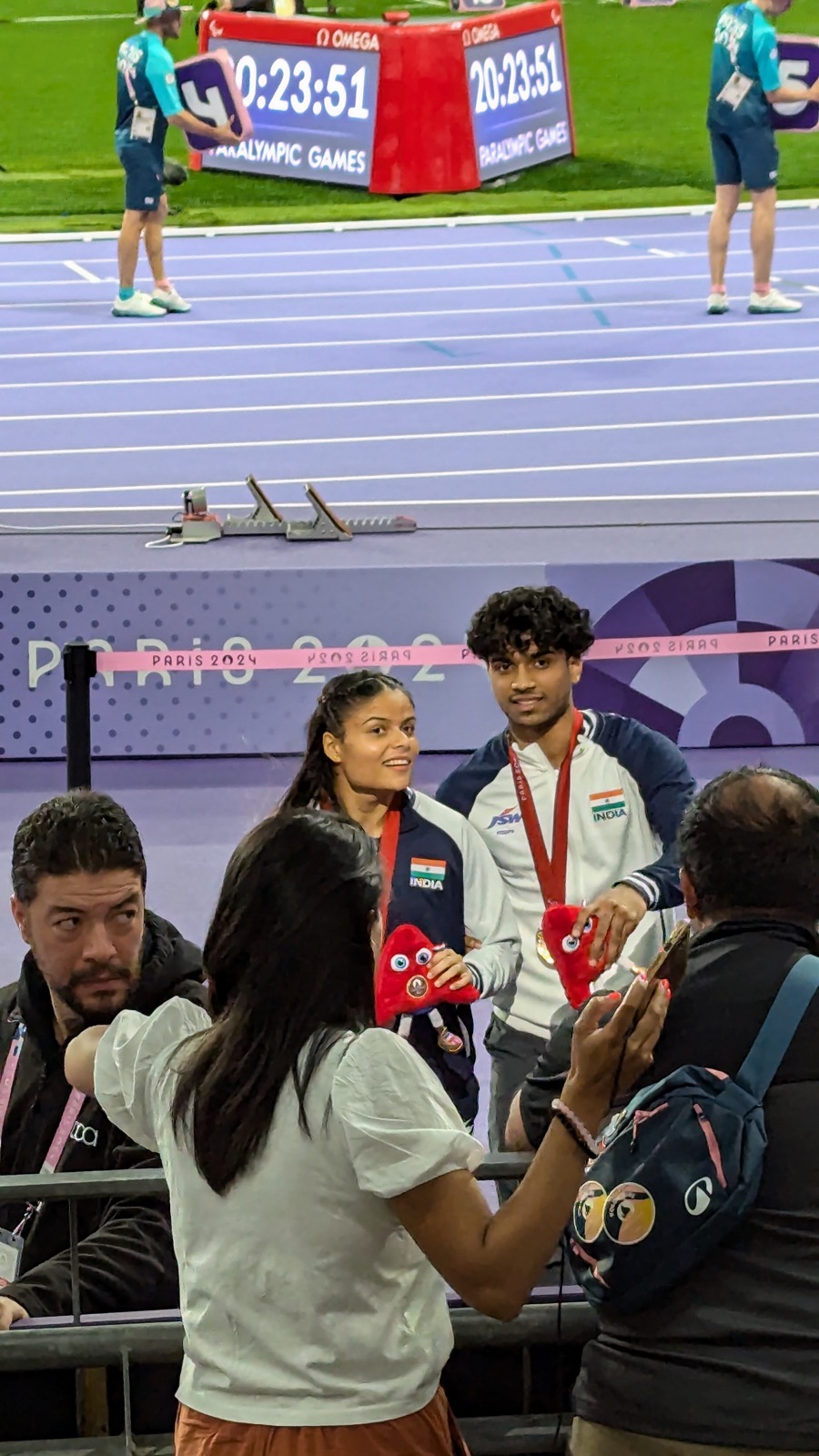
Image: Indian para-sprinter Simran Sharma with her guide at the Paris 2024 Paralympics — AwkwardChester, CC BY-SA 4.0, via Wikimedia Commons.