
The Indian community in mainland France is estimated at around 119,000 people, concentrated overwhelmingly in Île-de-France — more than half of it in and around Paris. Roughly 10,000 Indian students are currently enrolled here, a number both governments have said they want to see reach 20,000 and then 30,000 by the end of the decade, alongside a new Young Professionals Scheme launched in 2025 that is expected to bring hundreds more each year on posting. None of that is a small, quiet population. It is a growing one, disproportionately young, arriving for a masters, a first posting, a research contract — the exact profile of people who, a year or two earlier, were still playing something. Football on a school ground. Cricket in a street. Badminton at a club.
What almost none of them arrive knowing is how sport actually works in France.
There is no single national system to walk into. French sport runs almost entirely through the club — the local, often century-old associative structure, affiliated to a federation, that owns the pitch, the coach, the licence and the calendar. To play regularly, you need a licence sportive, issued by the club through its federation, usually requiring a medical certificate and an annual fee. It is not complicated once you know it — but nobody hands a newcomer that explanation on arrival, and the club culture assumes a familiarity, and often a language, that a first-year arrival simply does not have yet. The result is not indifference. It is a gap nobody built a bridge across — the exact gap a member of the Indian community described to us plainly at the Embassy's Defence Wing in Paris this July: there was nobody to play with, and nobody had built the door.
That sentence is the starting point for what comes next, not the end of the conversation.
Some of the door already exists, and it is worth naming plainly rather than treating this as a problem with no current answer. #SundayOnCycle — IFSA's Fit India-inspired weekly ride through the streets of Paris — needs no licence, no club affiliation, no fluent French: it is a walk-up, any-fitness-level entry point, open the same way every week. The para-sport pathway with INSEP and the Paralympic Committee of India, active since Paris 2024, is proof that formal, federation-level access is possible when someone builds the specific bridge rather than assuming newcomers will find it themselves. And the basketball letter of intent with the Ligue Nationale de Basket, the student-athlete route with LOSC Lille and the Université de Lille — these are, at their core, the same idea in a different sport: a formal door, built on purpose, instead of a system that only works if you already know how it works.
The honest next step is not another essay describing the gap. It is treating every one of those existing doors as unfinished until the people they are for actually know they are open — and building the ones that don't exist yet with the people who need them, not for them. If you are an Indian student, athlete, coach or sports professional in France and you have not found your door yet, that is the gap we are trying to close. Write to us at info@indofrenchsport.com — not for a list, but because the next thing we build here should be built for you, and we would rather ask than guess.
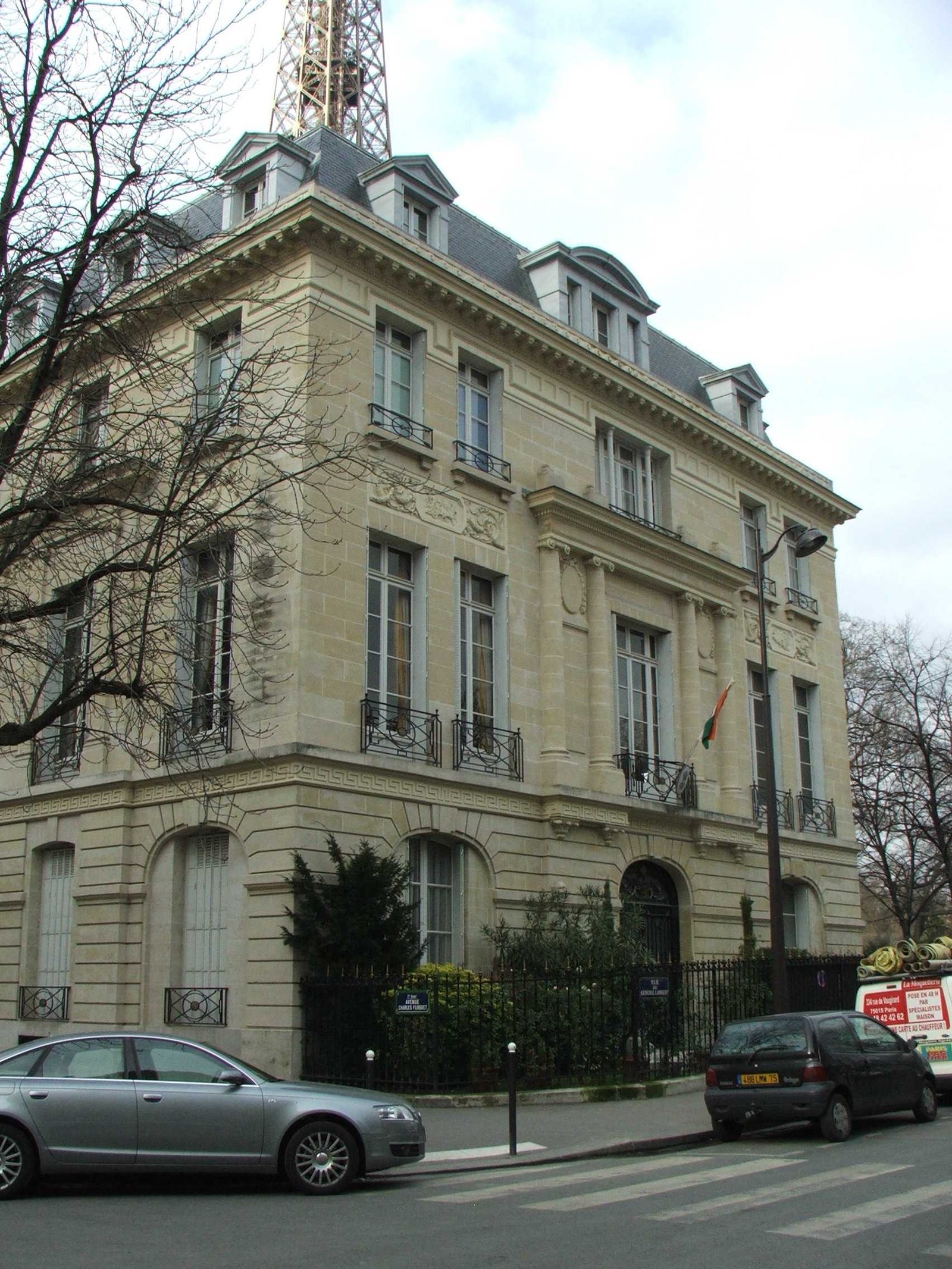
Image: the Embassy of India, Paris — photograph by Krokodyl, CC BY 3.0, via Wikimedia Commons.