
India's Olympic dream has a date, a city, and now, a test. Ahmedabad's bid for the 2036 Games is in the IOC's “Continuous Dialogue” stage — but the message from Lausanne has been candid. Before serious hosting talks advance, India must answer hard questions: governance of its Olympic movement, anti-doping credibility, and the depth of its sporting performance. Officials with knowledge of the IOC's deliberations have reportedly cast these three concerns as potential “showstoppers” — issues India must address before the bid can advance.
New Delhi has responded. The Indian Olympic Association resolved its leadership standoff and ratified its CEO. A seven-member anti-doping panel is being set up, with athlete education from the grassroots up. The IOA has swung behind the National Sports Bill it once resisted. These are real steps. But reforms on paper are not the same as capability on the ground — and the IOC knows the difference.
Here is what often gets missed in this debate: the answers India is looking for already exist, two years old and half a world away.
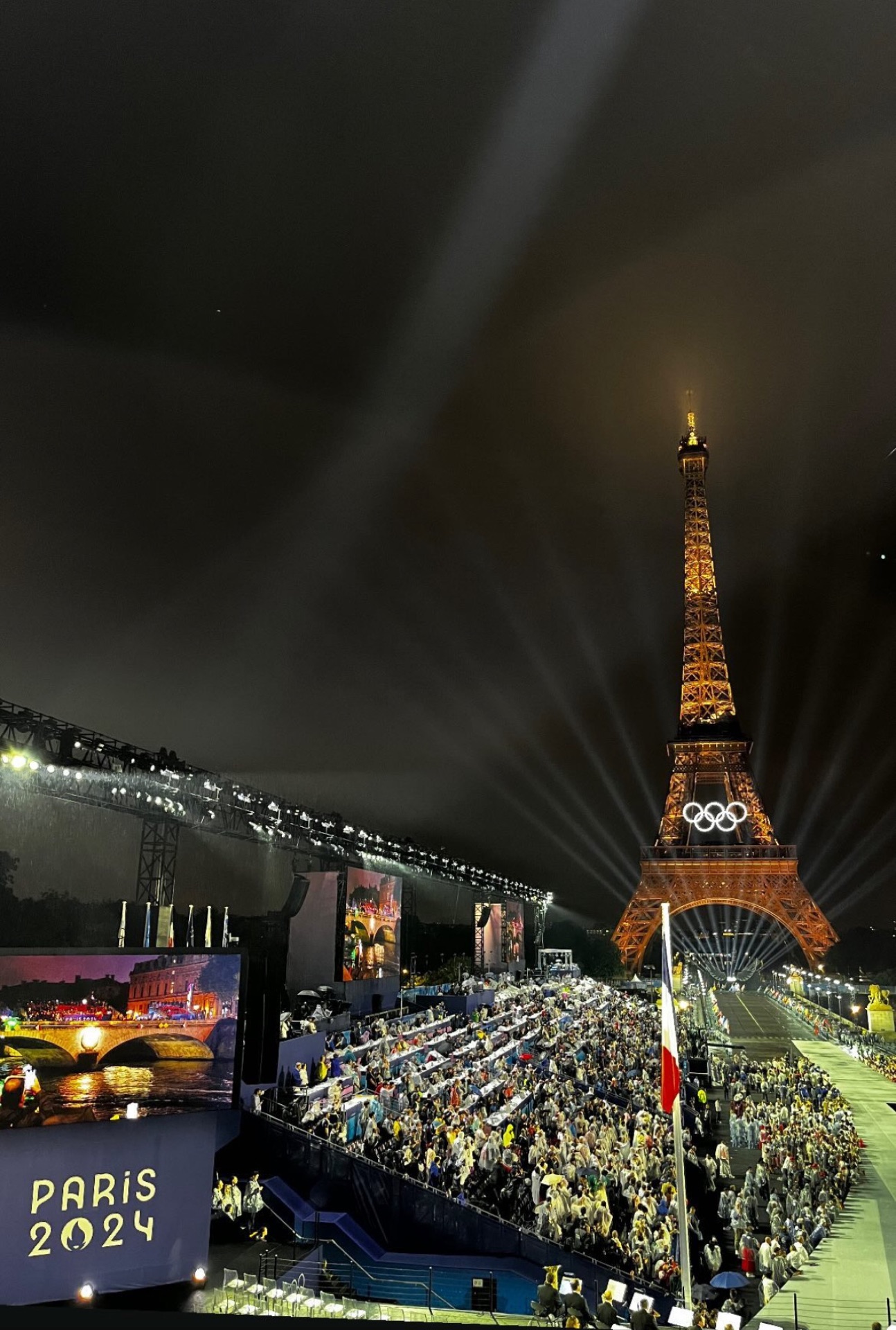
Paris 2024 was the most budget-disciplined Games of the modern era — roughly ninety-five per cent of its venues were existing or temporary. It delivered on time, within a governance framework the IOC now holds up as the model, and it left behind not white elephants but a legacy: swimming pools in Seine-Saint-Denis, a national appetite for sport, and a playbook for how a democracy hosts the Games without breaking itself. When the IOC asks Ahmedabad “how will you deliver responsibly?”, the most convincing answer India can give is: the way Paris did — and with Paris's help.
That help is on offer. France was the first country to publicly back India's bid — President Macron pledged it to Prime Minister Modi in early 2024, committing to share Paris 2024 expertise and host Indian athletes in French facilities. And the channel is no longer theoretical. This month, a FICCI sports delegation of more than twenty Indian sports-industry leaders toured the Stade de France, INSEP, and Marseille's Olympic venues, studying exactly how France turned a Games into a legacy; a French delegation returns to India in November for FICCI TURF, and a white paper — “French Olympic Legacy: Key Learnings for India's Journey Ahead” — is on its way to Indian government agencies.
Delegations, however, go home. Papers get filed. What the 2036 project needs between the summits and the studies is what we at the Indo-French Sports Association have spent seven years building, since 2019: the permanent, working bridge. Grassroots exchanges between Indian state associations and French clubs. Training camps where young Indians experience French sporting standards first-hand. Para-sport and wellbeing programmes that reflect the Games India says it wants to host — one where the country doesn't just build stadiums, but builds athletes, coaches, systems, and belief.
The IOC's caution is not a rejection. It is a to-do list. And almost every line on it — governance culture, athlete development, delivery discipline — is a line France has recently mastered and offered to share. The window between now and the IOC's decision is where the India–France sporting relationship stops being a diplomatic nicety and becomes India's competitive advantage.
India's bid does not need more ambition; it has plenty. It needs proof of capability. France is where that proof lives. The bridge is open — the question is how fast India chooses to cross it.