
There is a hunger in India's young people that anyone paying attention can feel — and it does not belong to athletes alone. The future doctor, the engineer, the architect, the footballer: across every field, this is a generation asking for the same thing. To be judged on what they can do. To be seen, tested and rewarded on merit — plainly and fairly, on ability and effort rather than on where they were born or who they know. It is one of the most powerful forces in the country today. And it deserves more than encouragement. It deserves a door — and a fair path to walk through it.
Here is what is easy to miss about sport: it was never only for the ones who turn professional. Sport is a door that opens for everyone. It is merit in its purest, most visible form — you are judged, plainly, on what you do — and it builds the things that carry a young person anywhere: discipline, teamwork, resilience, the habit of being measured and getting back up. A child who trains seriously might become a professional player. Or, through the very same discipline and the doors that sport opens — scholarships, schooling, travel, belief — they might become a surgeon, an engineer, an architect. Sport does not ask what you will become. It gives you a fair path, and lets you run.
France understood this decades ago, and built for it. After winning the European Championship at home in 1984, the French football federation opened a national academy in a quiet estate southwest of Paris: Clairefontaine. It finds the most talented 12- and 13-year-olds, judges them purely on ability over three days of trials, takes in barely two dozen a year, and covers every cost — so that talent, not money, decides who gets in. And, tellingly, the young players train through the week and attend ordinary schools: the education is built in, because a fair system serves the child whatever they become. Out of that method came Thierry Henry, William Gallas, Blaise Matuidi and Kylian Mbappé — and many more who carried its discipline and its schooling into other lives entirely.
That is the deeper French lesson, and it reaches far beyond football. "Sport-études" programmes let a teenager pursue a diploma and a professional dream at once. And the same principle — give ability a fair, structured path, and it will carry a young person from a local pitch or a small-town classroom to a world stage — runs through France's academies, its famously meritocratic schools, and its research campuses. Merit, and a method to honour it, belongs to medicine and engineering and architecture just as much as to the game.
India has the talent and, right now, the hunger — in every field. France has spent forty years refining the method, and it is opening its doors wider than ever. For the young Indian drawn to medicine, a Franco-Indian campus in life sciences and health is being built around dual degrees. For the engineer or the scientist, 2026 has been named the India–France Year of Innovation by Prime Minister Narendra Modi and President Emmanuel Macron. For every student, France is aiming for 30,000 Indians on its campuses by 2030, with new "Classes Internationales" to bridge the language gap and a five-year visa that turns a degree into a lasting link. Different doors — one principle: a fair path, and merit at the threshold.
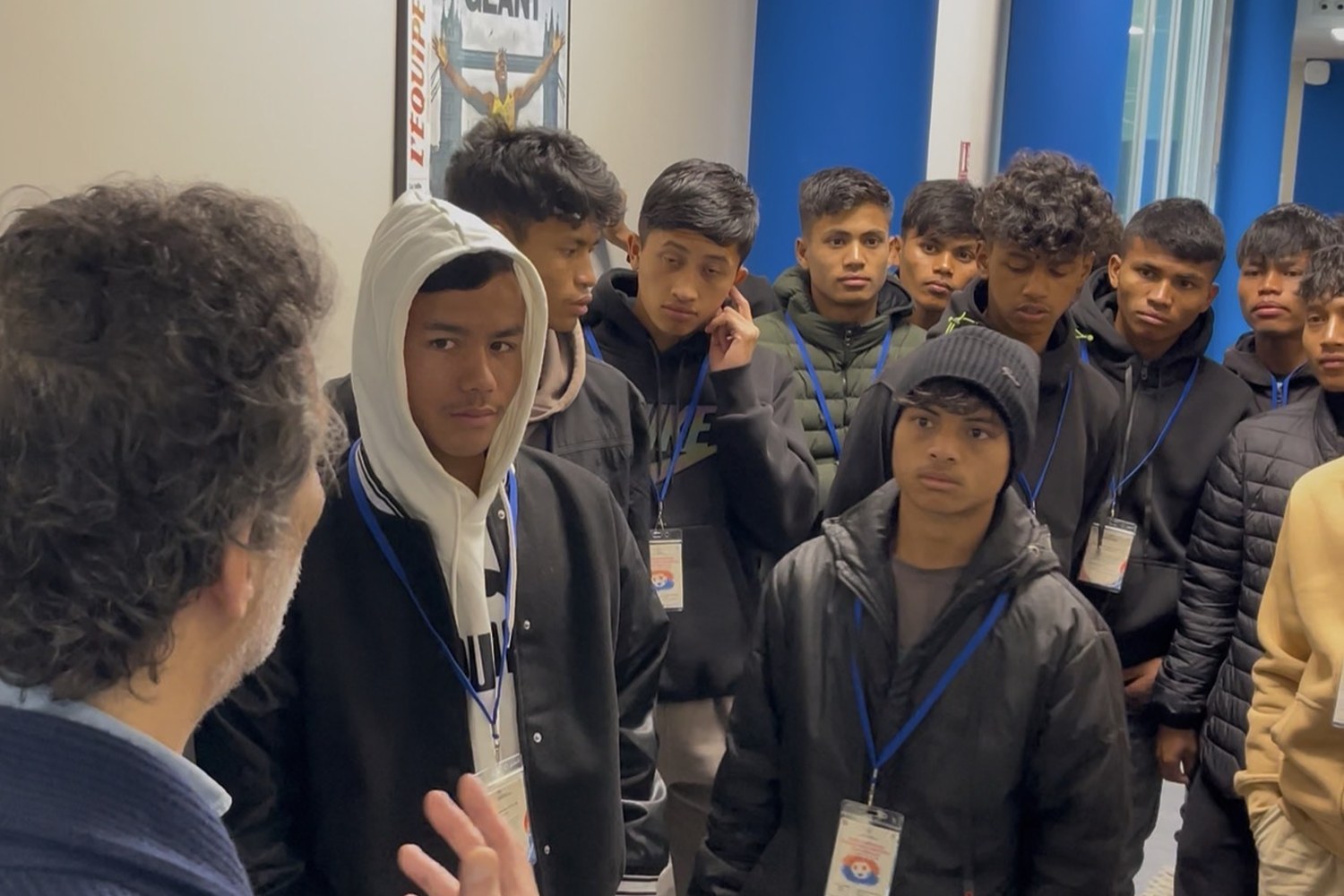
Sport is IFSA's own entry into that bridge — French coaching and academy pathways, anchored by its partnership with Olympique Lyonnais, and the Indo-French Football Tournament, which reaches Indian soil this October, bringing French and Indian youth onto the same pitch. But IFSA's eye is on the whole young person, not only the player — because a coaching camp, a scholarship, an exchange can open a life in any direction. It is a bridge-builder, offering India's young people not just a door to France, but the French habit of developing talent on merit, and working to build more of both.
That work is now reaching into education itself. Together with Indian stakeholders, IFSA is developing sports-education programmes — drawing on French models — designed to change how young people learn through sport: less rote pressure, more hands-on, experience-based learning that builds confidence as much as skill. The aim is an approach that accommodates every child, not only the naturally gifted, and prepares them for the future — because a young person who learns to try, fail, recover and grow on a pitch carries that confidence into a classroom, a hospital, a studio, a life. This is how IFSA sees India's development: not only stronger athletes, but a more confident generation. And in it, France stands beside India — not above it — lending a partner its strengths, as a partner. That mutual support, each country giving the other its best, is what the India–France friendship is really for.
The systems and the summits matter, but the real measure is a single young person. Somewhere in India there is a teenager who dreams of healing, or of building, or of playing for their country — and above all wants a fair chance to prove what they can do. Sport is one of the surest doors to that fairness, and it opens onto every future. France built its method for exactly that kind of belief, four decades and one World Cup ago. The work now is to make sure a young Indian has the same kind of door — and someone, on the other side of the world, holding it open. That is what IFSA is for.