

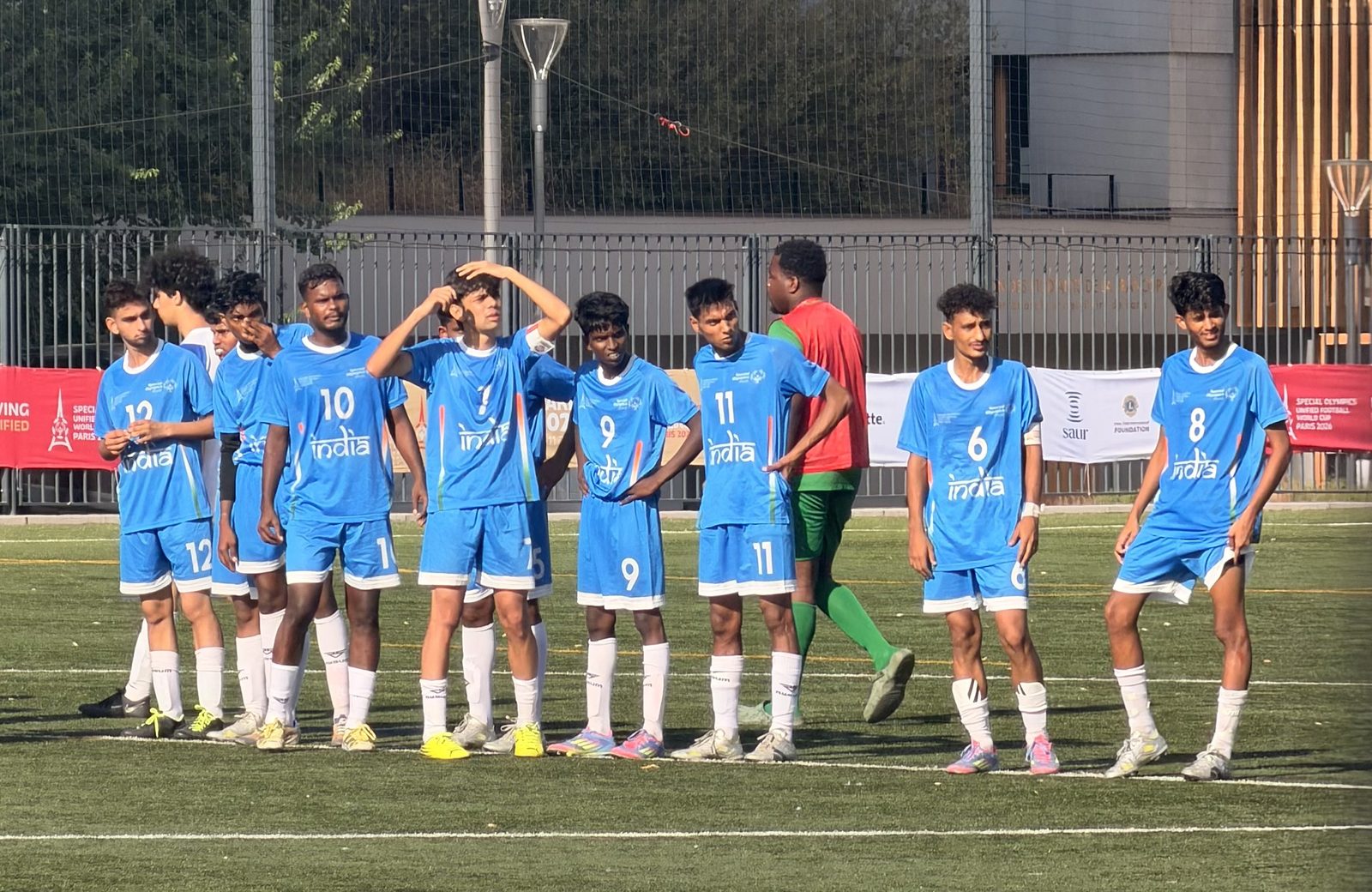
This month, a football team representing India finished above France at a World Cup held in France — silver to France’s bronze, on a Paris podium. And in India, a country of 1.4 billion people that stops for football it does not even play in, the achievement passed almost without a headline.
The team was Special Olympics Bharat, India’s Unified side, and the instinct to file that fact under “a different kind of football” is exactly the instinct worth questioning. Football is football. These athletes qualified, travelled, competed against the world, and finished second — ahead of the host nation. The medal is not an asterisk. The silence around it is.
Hold that result next to another fact. India’s senior men’s team has never played a FIFA World Cup and sits outside the world’s top 100, while France — the team India’s own players just out-placed in Paris — sits at the very summit of the global game. The gap is real, and it is not about passion; India’s football audience is among the largest on earth. It is structural: thin grassroots and academy networks, gaps in coaching and infrastructure, cricket’s pull on talent and money, and years of instability at the top of the game.
So here is the uncomfortable pairing. When an Indian team does stand on a world podium, the country looks away — and at the stage India most wants, the country is not there at all. Both point the same direction: India’s problem has never been the will to play. It is the pathway from a schoolyard to a world stage, and who is building it.
That is the conversation worth having this month — not whether one silver medal changes Indian football (it does not, by itself), but why a nation this large keeps arriving late to a game it loves this much. France spent forty years building the method that keeps it at the top. India has the talent and, right now, the hunger. What it needs is the bridge between the two — and the attention, at home, to notice when its own teams are already crossing it.